Thermocol Food Packaging in Pakistan: Uses, Safety Concerns & Practical Guide
- Sufiyan Ghazi
- No Comments
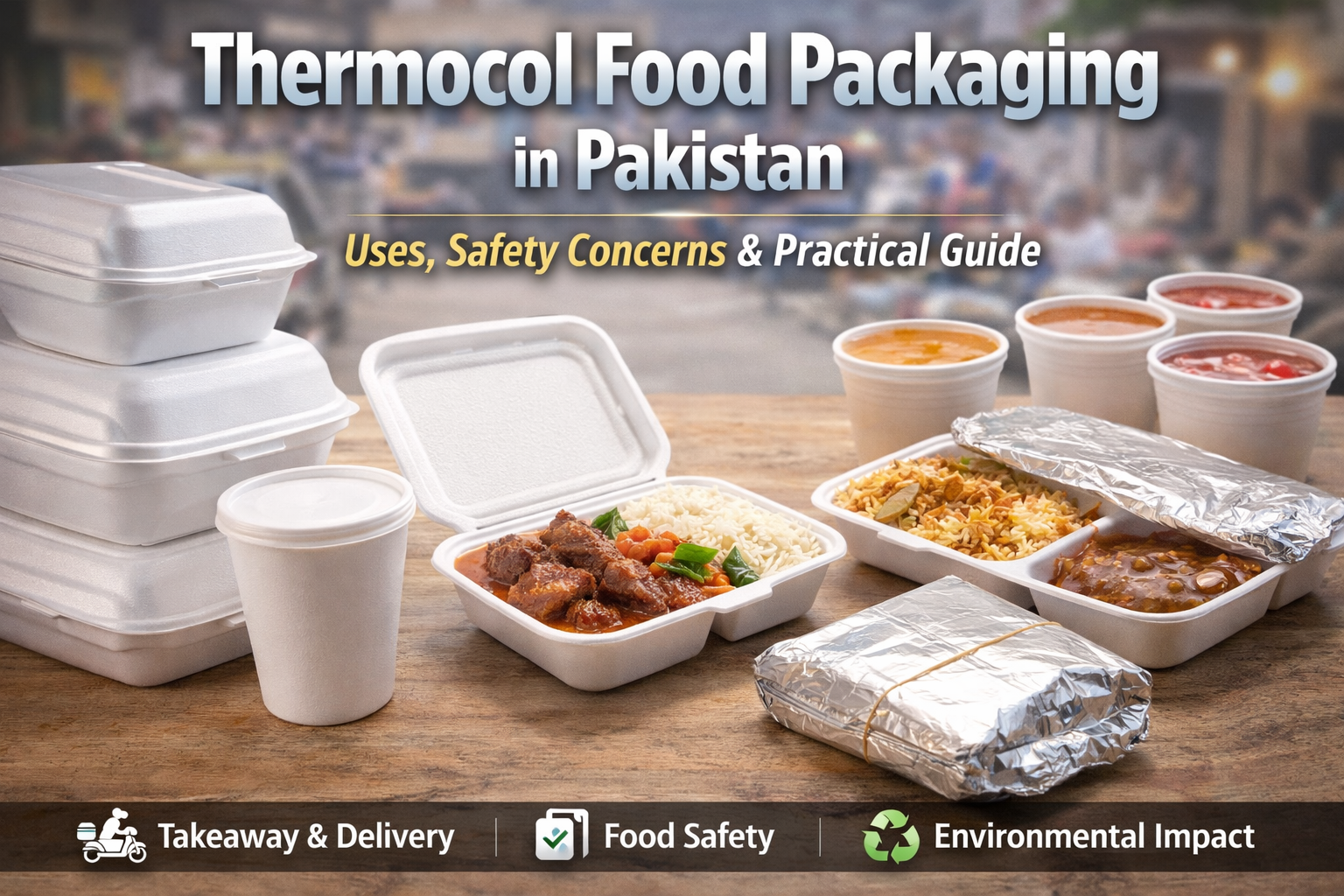
Thermocol food packaging has become a familiar sight across Pakistan, especially with the rapid growth of takeaway services, street food culture, and large-scale catering. From hot rice meals to curries and desserts, thermocol containers are widely used to keep food warm and protected during transportation. Their lightweight nature and insulating properties have made them a convenient choice for food businesses and households alike.
Despite its widespread use, thermocol packaging often raises questions regarding food safety, health concerns, and environmental impact. This article explores thermocol food packaging in detail, covering its uses, safety considerations, comparisons with other materials, and practical guidance for responsible usage in Pakistan.
What Is Thermocol?
Thermocol is a lightweight material made from expanded polystyrene (EPS). It is created by expanding small polystyrene beads using heat, resulting in a foam-like structure filled with air. This structure gives thermocol its excellent insulation properties, making it effective at retaining temperature.
In Pakistan, thermocol is commonly used for food container, cups, plates, and boxes due to its low cost and easy availability. Its ability to keep hot food warm and cold food cool has contributed significantly to its popularity in the food industry.
Common Uses of Thermocol Food Packaging
Thermocol packaging serves a wide range of purposes in everyday food handling and commercial food services.
Takeaway and Food Delivery
One of the most common uses of thermocol containers is in takeaway and food delivery. Restaurants and food stalls rely on thermocol to maintain food temperature during transit, especially for hot meals such as rice, gravies, and curries.
The material helps reduce heat loss, ensuring that food reaches customers in a warm and presentable condition.
Catering and Large Events
In catering services and events such as weddings and corporate gatherings, thermocol containers are often used for serving and transporting food. Their lightweight design makes them easy to stack and handle, reducing logistical challenges during large-scale food distribution.
Street Food and Small Vendors
Street food vendors across Pakistan frequently use thermocol bowls and plates for serving food quickly and conveniently. For vendors operating in fast-paced environments, thermocol offers a practical and affordable solution.
Thermocol and Food Safety: What You Should Know
While thermocol is widely used, food safety remains a major concern for many consumers and businesses.
Is Thermocol Safe for Hot Food?
Thermocol is generally designed to handle warm food; however, extremely hot or oily food can pose risks. When exposed to very high temperatures, thermocol may soften slightly, raising concerns about potential chemical migration.
For this reason, it is recommended to:
- Avoid pouring boiling-hot liquids directly into thermocol containers
- Use an inner lining or allow food to cool slightly before packaging
Oily and Acidic Foods
Foods that are highly oily or acidic may interact with thermocol over extended periods. While short-term contact is generally considered acceptable, prolonged storage of such foods is not advised.
Using thermocol primarily for temporary storage and transportation rather than long-term food holding is a safer practice.
Health Concerns and Public Awareness
In recent years, awareness regarding food packaging safety has increased in Pakistan. Consumers are becoming more conscious of what materials come into contact with their food.
Although thermocol is approved for food use in many regions, misuse or exposure to excessive heat can raise concerns. Educating food handlers and vendors about proper usage can help minimize potential health risks.
Thermocol vs. Other Food Packaging Materials
Many people wonder how thermocol compares to other commonly used food packaging materials.
Thermocol vs. Plastic Food Containers
Thermocol offers better insulation compared to standard plastic containers, making it more suitable for hot food delivery. However, plastic containers are generally more durable and better suited for reheating and reuse.
Thermocol vs. Paper-Based Packaging
Paper-based containers are often considered more eco-friendly, but they may lack insulation and leak resistance. Thermocol, on the other hand, provides better temperature retention but poses environmental challenges.
Each material has its own advantages and limitations, and the choice depends on the specific food type and usage scenario.
Environmental Impact of Thermocol in Pakistan
One of the biggest concerns surrounding thermocol is its environmental impact. Thermocol is not biodegradable and can take a very long time to break down in the environment.
Improper disposal contributes to:
- Landfill overcrowding
- Waterway pollution
- Harm to wildlife
As environmental awareness grows in Pakistan, there is increasing discussion about reducing single-use packaging and exploring sustainable alternatives.
Responsible Use and Disposal
To minimize environmental harm, responsible usage of thermocol is essential.
Some practical steps include:
- Using thermocol only when insulation is necessary
- Avoiding unnecessary single-use packaging
- Disposing of thermocol waste properly
Where recycling facilities exist, clean thermocol should be separated from food waste to improve recycling outcomes.
Practical Guide for Choosing Thermocol Packaging
When selecting thermocol food packaging, consider the following factors:
- Type of food being served
- Temperature requirements
- Duration of storage or transport
- Hygiene and handling practices
For short-distance food delivery and quick consumption, thermocol containers can be a convenient option. For longer storage or reheating, alternative packaging materials may be more suitable.
Alternatives to Thermocol Packaging
With growing concern about sustainability, many food businesses in Pakistan are exploring alternatives such as:
- Paper-based food boxes
- Biodegradable containers
- Reusable food packaging
While these options may involve higher initial costs, they offer long-term environmental benefits and align with evolving consumer preferences.
Conclusion
Thermocol food packaging continues to play a significant role in Pakistan’s food industry due to its affordability, insulation properties, and ease of use. From street food vendors to large catering operations, it offers practical solutions for food transportation and temporary storage.
However, responsible usage is essential to address safety and environmental concerns. Understanding proper handling practices, temperature limitations, and disposal methods can help ensure safer food packaging while minimizing environmental impact.
By staying informed and making thoughtful choices, both consumers and food businesses can balance convenience with health and sustainability, contributing to better food practices across Pakistan.