
Blog
Butter Paper vs Wax Paper: Complete Guide Uses, Differences & Best Choice (Karachi, Pakistan)

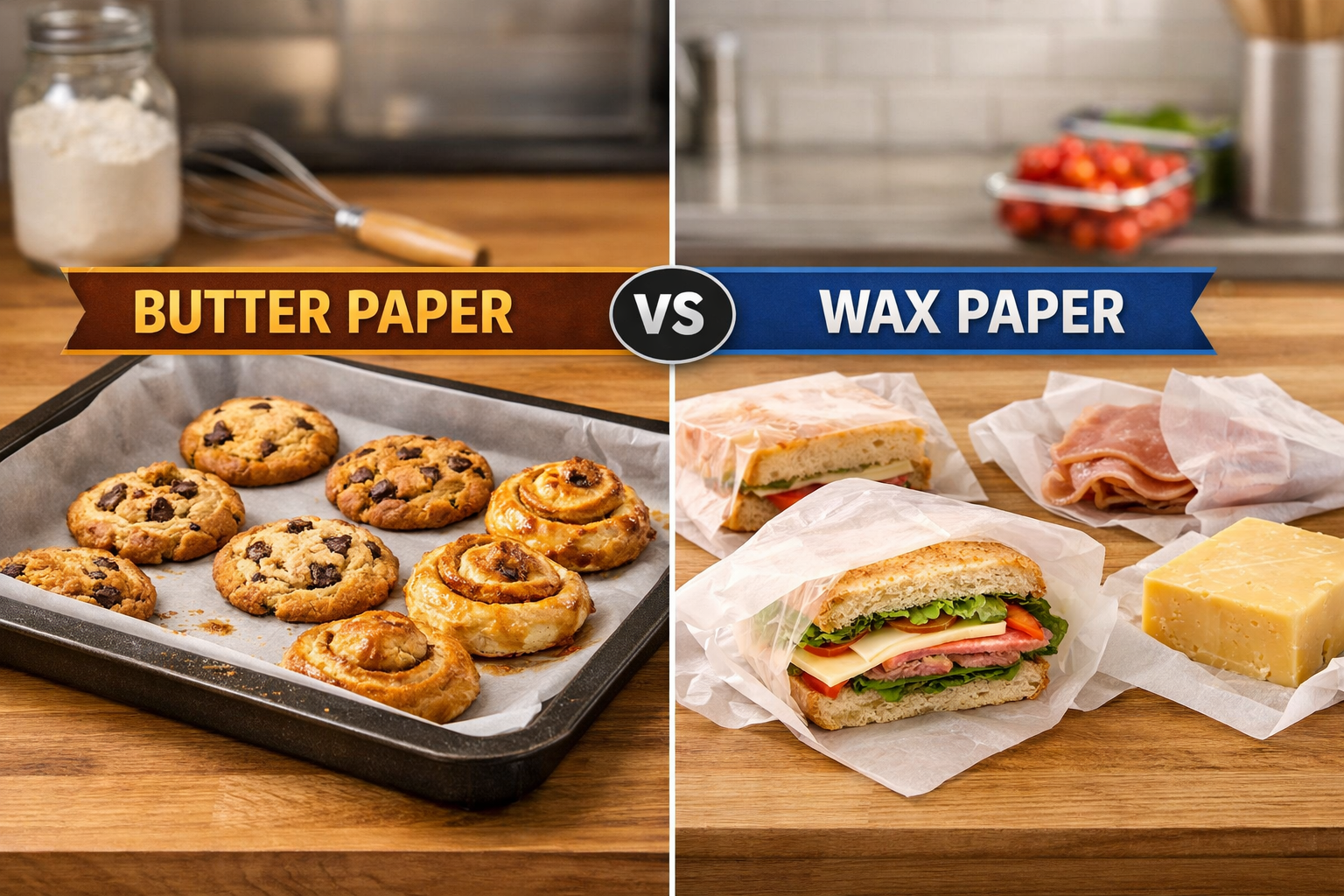
When working in the kitchen, baking, cooking, or packaging food in Karachi, you might often wonder: What is the difference between butter paper vs wax paper? Which one should I use and when? Although they may look similar, butter paper and wax paper have distinct properties, uses, and benefits. Whether you’re a home cook, baker, food vendor or a business in Pakistan, this guide will help you understand everything about these essential kitchen papers.
What is Butter Paper? (Definition, Composition & Uses)
Butter paper (also known as greaseproof paper) is a specially treated food‑grade paper designed to resist oil, grease, and moisture. It is naturally non‑stick and provides a clean surface for food preparation and packaging. Unlike wax paper, butter paper is typically stronger and more versatile in handling higher temperatures.
Composition
Butter paper is made from wood pulp or cellulose that has been processed to become grease‑resistant. Some variants are silicon‑coated (like baking/parchment paper), but traditional butter paper may not always be silicone coated.
Common Uses
- Wrapping greasy foods such as sandwiches, burgers, and kebabs
- Packaging bakery items, pastries, candies, and snacks
- Separating layers of oily food products
- Lining fast‑food trays to prevent grease leaks
- Serving food in restaurants or food stalls
In Pakistan’s food market, butter paper is widely used by bakeries, tandoor houses, roadside food vendors, and cloud kitchens to wrap hot and oily foods securely.
What is Wax Paper? (Definition, Composition & Uses)
Wax paper is paper that has been coated with a thin layer of wax usually paraffin or soybean wax—to make it moisture‑proof and slightly grease‑resistant. Its main advantage is its excellent resistance to moisture and sticking, but it is not heat‑resistant.
Composition
Wax paper is essentially regular paper infused with a thin coating of wax. This coating creates a moisture‑resistant surface that helps prevent water or oil from soaking into the paper.
Common Uses
- Wrapping cold foods like sandwiches, chocolates, and cheeses
- Covering food items for refrigeration or storage
- Lining trays or containers for food prep
- Separating dough pieces
- Freezing food items to prevent sticking
Because wax paper cannot tolerate heat, it should never be used in the oven or for baking.
Butter Paper vs Wax Paper — Side‑by‑Side Comparison
Let’s break down the main differences clearly so you can decide which one to choose for specific tasks:
| Feature | Butter Paper | Wax Paper |
| Heat Resistance | Heat‑resistant (if silicon‑coated) | Not heat‑resistant |
| Moisture Resistance | Moderate | Strong |
| Grease Resistance | Excellent | Effective |
| Oven Use | Safe for baking | Not safe |
| Use in Refrigerator/Freezer | Yes | Yes |
| Best For | Baking, cooking, food wrapping | Wrapping, storage, prep |
| Typical Users | Bakeries, kitchen & restaurants | Everyday kitchen & food
storage |
Butter Paper + Wax Paper: When to Use Each (Expert Tips)
When Should You Use Butter Paper?
Use butter paper when your task involves:
- Baking cakes, cookies, roasted foods
- Lining baking trays and oven racks
- Wrapping hot or greasy foods
- Commercial food packaging where grease is present
- Because it can handle heat up to high temperatures (especially if silicon‑coated), it’s ideal for ovens and steaming.
Example Uses in Karachi
- Bakers lining cake tins
- Catering services prepping snacks
- Restaurants serving hot rolls or kebabs
When Should You Use Wax Paper?
Choose wax paper when your task involves:
- Wrapping cold or refrigerated foods
- Separating food layers in containers
- Preparing dough or candies
Because wax melts easily, it must not go into an oven.
Example Uses in Pakistan
- Sandwich shops wrapping breakfast rolls
- Home kitchens storing leftover sweets
- Freezers keeping frozen snacks non‑sticky
Butter Paper and Baking Paper Are They the Same?
People often get confused between butter paper, baking paper, parchment paper, and wax paper. The key difference is this:
Baking (or parchment) paper : coated with silicone and heat‑resistant — ideal for baking and oven use.
Butter paper : greaseproof, great for food wrapping with moderate heat tolerance (especially if silicon‑coated).
Wax paper: moisture‑resistant but not suitable for use in heat environments.
So, while baking/parchment paper and butter paper can sometimes be used interchangeably in kitchens, wax paper is a different product meant mainly for storage and wrapping, not baking.
Common Questions People Search About Butter Paper vs Wax Paper
Can I use wax paper instead of butter paper for baking?
No. Wax paper will melt or smoke in an oven and can transfer wax into the food. Always choose butter or baking‑grade paper for heat applications.
Which one is better for wrapping greasy snacks like shawarma or kebabs?
Butter paper is ideal for greasy snacks as it resists oil and prevents soaked‑through packaging. Wax paper is better for wrapping cold or less greasy food.
Is butter paper eco‑friendly?
Most food‑grade butter paper is biodegradable and eco‑friendly compared with plastic wraps, making it a sustainable choice in food packaging. Always check product details on your supplier’s site.
Can wax paper be used in microwave cooking?
Wax paper is safe in a microwave only to prevent splatters, but never in ovens or high‑heat cooking.
Which one is more cost‑effective?
Wax paper is generally cheaper than butter paper because it is simpler to produce. Butter paper (especially silicone‑coated baking paper) is more durable and suited for gourmet kitchens.
Where to Buy Quality Butter Paper in Karachi, Pakistan
If you’re looking for premium greaseproof or butter paper products in Karachi, Ghazi Plastic offers a wide range of butter paper sheets rolls perfect for bakeries, homes, restaurants, and food packaging businesses.
We provide durable, food‑safe butter paper ideal for daily kitchen use, packing oily foods, lining trays, and more.
Choose the Right Paper for Your Needs
Understanding the difference between butter paper vs wax paper helps you make smarter choices in the kitchen and food packaging. Here’s a quick takeaway:
Use butter or baking paper for baking, hot foods, oven use, and grease‑prone tasks.
Use wax paper for wrapping cold foods, storing items in freezers, and general kitchen prep.
Whether you’re a passionate home baker in Karachi or a professional food vendor, choosing the right kind of paper ensures better results, improved food safety, and a cleaner kitchen experience.
