How to Use Plastic Wrap: The Complete Guide to Cling Film and Stretch Wrap
How to Use Plastic Wrap: The Complete Guide to Cling Film and Stretch Wrap
- Sufiyan Ghazi
- No Comments
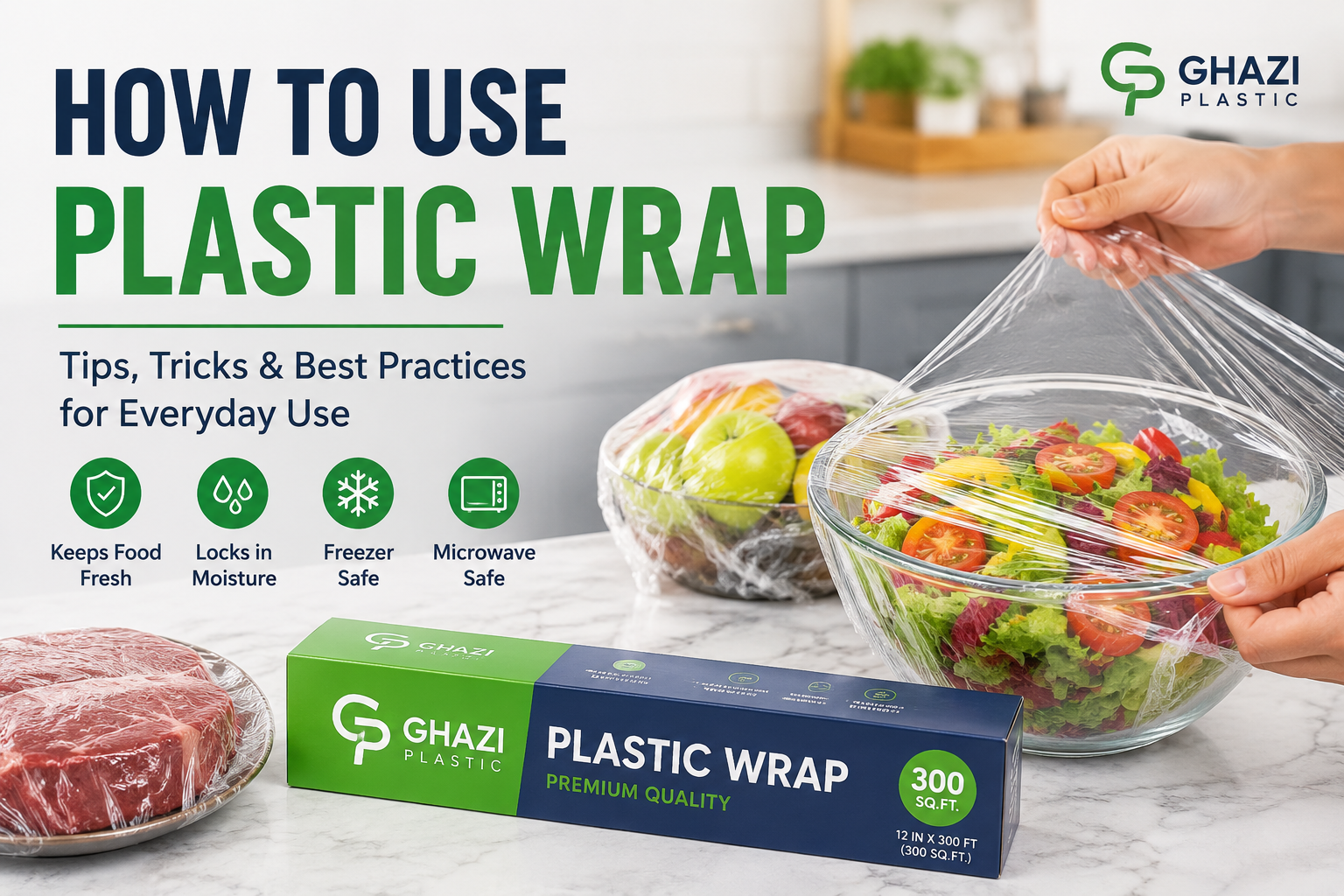
Plastic wrap sits in almost every kitchen drawer in Pakistan, yet most people only ever use it one way: tear off a piece, cover a bowl, hope it sticks. Used properly, plastic wrap can extend the shelf life of food by days, protect items during storage, and even help secure luggage during travel. This guide covers how to use plastic wrap correctly, what type to buy for different jobs, and when a different product altogether is the better choice.
What Is Plastic Wrap and How Does It Work?
Plastic wrap, also called cling film or cling wrap, is a thin, flexible plastic sheet that clings to surfaces without needing tape or adhesive. The film is made from a polymer that carries a slight static charge and has a tacky surface, which is what lets it grip the rim of a bowl or seal tightly against a plate. Once in place, it forms a barrier that blocks air, moisture, and dust from reaching whatever is underneath.
That barrier is the entire point. Food spoils faster when it is exposed to air, because oxygen speeds up bacterial growth and moisture loss. A tight layer of plastic wrap slows both processes down, which is why it remains one of the simplest, cheapest tools for food preservation in a home kitchen.
How to Use Plastic Wrap for Food Preservation
Reducing food waste often comes down to small habits, and covering leftovers properly is one of the easiest to build. Food left uncovered in the fridge dries out, absorbs other odors, and spoils faster than food that is sealed. Plastic wrap solves this cheaply, but only if it is applied correctly.
How to Cover a Bowl or Dish the Right Way
- Pull the wrap taut across the top of the bowl or dish before pressing it down. A loose sheet leaves gaps that let air in.
- Stretch it slightly past the rim on all sides so it has enough tension to grip and seal against the edge.
- Press down firmly around the rim with your fingers, working in a circle, so the film seals flush against the container with no loose corners.
- For dishes without a clean rim (a plate of food, for example), wrap the film fully underneath so it seals against itself on both sides.
The stretching step matters more than most people realize. Plastic wrap that is laid on loosely without tension will lift at the edges within a few hours, which defeats the purpose of covering the food at all.
Wrapping Different Types of Food
Not every food needs to be wrapped the same way.
- Cheese: Wrap loosely rather than airtight. Hard cheeses need to breathe slightly, and a fully sealed wrap can trap moisture and encourage mold. Change the wrap every few days rather than leaving the same piece on for weeks.
- Cut fruits and vegetables: Press the wrap directly against the cut surface to limit oxidation (this is what keeps a sliced apple or avocado from browning as fast). Leave a small gap at one edge for produce that continues to release gas after cutting, such as bananas or avocados, so the wrap does not trap excess moisture.
- Sandwiches and baked goods: Wrap snugly with no air pockets, since the goal here is mainly to stop the item from drying out rather than blocking gas exchange.
- Raw meat: Wrap tightly, with no gaps, and store on the lowest shelf of the fridge so any leakage cannot contaminate other food.
Types and Sizes of Plastic Wrap
Not all plastic wrap is the same product. Knowing the difference helps you buy the right one instead of assuming any roll will do the job.
- Cling film (PVC or PE-based): The everyday household wrap used for bowls, plates, and leftovers. This is the product most people mean when they say “plastic wrap.”
- Press ‘n Seal style wrap: A variation with adhesive on both sides, designed to stick to itself and to flat surfaces (not just rims), which makes it useful for freezer storage and irregular shapes.
- Stretch wrap: A thicker, wider industrial-style roll, not intended for food. It is used to bundle boxes, secure items during a move, or wrap luggage. It stretches and clings under tension rather than being lightly tacky the way food-grade cling film is.
Household cling film is typically sold in a common width of around 30cm, with thicker, heavier-duty rolls (up to roughly 20 microns) available for commercial kitchens that need extra puncture resistance. If you are buying for regular home use, a standard 30cm roll covers most needs; for a restaurant or shop preparing food in bulk, a wider or thicker roll reduces how often you need to replace it.
Plastic Wrap vs. Aluminum Foil vs. Parchment Paper
These three often sit in the same kitchen drawer, but they are not interchangeable.
| Best For | Microwave Safe | Reusable | |
|---|---|---|---|
| Plastic wrap | Covering bowls, sealing cut produce, short-term storage | Yes, if labeled microwave-safe and not touching food directly | No |
| Aluminum foil | Wrapping food for baking or grilling, blocking light | No | Sometimes, if lightly used |
| Parchment paper | Lining trays, baking, non-stick surfaces | Yes | No |
If the goal is an airtight seal on a bowl or plate, plastic wrap wins. If the goal is heat resistance in an oven, foil is the right choice, since plastic wrap will melt. Parchment paper is the better pick when you need a non-stick surface rather than a seal.
Is Plastic Wrap Safe? What to Know About Chemicals
This is one of the most searched and most misunderstood questions about plastic wrap.
Older cling film was commonly made from PVC (polyvinyl chloride), which historically used plasticizers called phthalates to keep the film flexible. Phthalates have raised health concerns when they migrate into fatty, oily foods, particularly under heat. Most modern household cling film sold today is made from PE (polyethylene) instead, which does not rely on phthalates and is generally considered the safer option for food contact.
A few practical rules reduce any risk regardless of which type you use:
- Avoid letting plastic wrap touch fatty or oily food directly, especially if microwaving.
- Only microwave wrap that is explicitly labeled microwave-safe, and leave a gap between the wrap and the food where possible.
- Do not reuse plastic wrap once it has touched raw meat or heated food.
Plastic Wrap Alternatives
Plastic wrap is convenient, but it is not the only option, and for some households it is not the preferred one.
- Beeswax wraps: Reusable cotton cloth coated in beeswax, which softens with the warmth of your hands to form a seal. They work well for covering bowls or wrapping items like cheese or bread, though they are not suitable for raw meat or anything that needs a fully airtight, washable seal.
- Silicone lids and stretch covers: Reusable, stretchable silicone covers that fit directly over bowls, jars, and cut fruit. They handle the microwave and dishwasher well, which plastic wrap cannot.
- Reusable containers with lids: For anything you know you will store for more than a day or two, a container with a snap-on lid is often more reliable than wrap, since it does not rely on tension or a clean rim to seal properly.
None of these fully replace plastic wrap in every situation. Beeswax and silicone are better for reusable, everyday storage; plastic wrap remains the more practical choice for quick, single-use jobs, sealing irregular shapes, or handling raw meat where a disposable barrier matters.
Environmental Impact and Recyclability
Plastic wrap is one of the least recyclable plastics in common household use. Most municipal recycling programs, including standard curbside collection, do not accept it, because its thin, flexible film jams sorting machinery designed for rigid plastics like bottles and containers.
That does not mean there is no way to reduce its impact:
- Use only as much as the job actually needs, rather than defaulting to a large sheet out of habit.
- Reserve plastic wrap for situations where it is genuinely the best tool (raw meat, cut produce, quick covers) and use reusable alternatives for everyday leftovers you store often.
- Buy the size and thickness that matches your actual use, since over-buying heavy-duty commercial rolls for occasional home use just means more plastic used than necessary.
Where to Buy Plastic Wrap for Luggage
Plastic wrap and luggage wrap are often confused, but they are not the same product. The thin cling film used for food is far too light and narrow to protect a suitcase. Luggage wrapping, the kind you see done at airports, uses a thicker, wider industrial-style film known as stretch wrap or shrink stretch roll.
This type of wrap serves a different purpose entirely. Instead of sealing in freshness, it stretches tightly around the outside of a bag and clings to itself under tension, without needing heat or tape. That makes it useful for:
- Protecting bags from scuffs, dirt, and weather damage during travel
- Making it obvious if a bag has been opened or tampered with in transit
- Bundling and securing boxes or items during a house move, not just luggage
For this job, Ghazi Plastic’s Shrink Stretch Plastic Roll (12 Inch) is built for exactly this kind of use. It requires no heat or taping, sticks tightly to itself once wrapped, and is rated for heavier items, which is why it is commonly used for carton and box packing as well as luggage. If you are wrapping bags before a flight or securing boxes for a move within Karachi, this is the right product, not standard kitchen cling film.
Frequently Asked Questions
Can you microwave plastic wrap?
Only if it is labeled microwave-safe, and even then, it should not touch the food directly. Leave a small gap or vent for steam to escape.
How long does food stay fresh under plastic wrap?
It depends on the food, but a tightly sealed wrap typically extends freshness in the fridge by a few extra days compared to leaving food uncovered, since it blocks air and slows moisture loss.
What’s the difference between cling film and stretch wrap?
Cling film is a thin, food-safe wrap used for bowls, plates, and leftovers. Stretch wrap is a thicker, wider, non-food film used for bundling boxes and wrapping items like luggage during travel or moving.
Is plastic wrap the same as shrink wrap?
Not quite. Plastic wrap and stretch wrap cling to themselves under tension at room temperature. Shrink wrap is a different film designed to tighten around an object when heat is applied.